The Programme
A 13-Year Framework for Future-Ready Learning
IFISA runs alongside a school’s national curriculum to build deep, cumulative STEM and AI competence, from early years through graduation.
Programme Overview
Structured. Cumulative. Transformative.
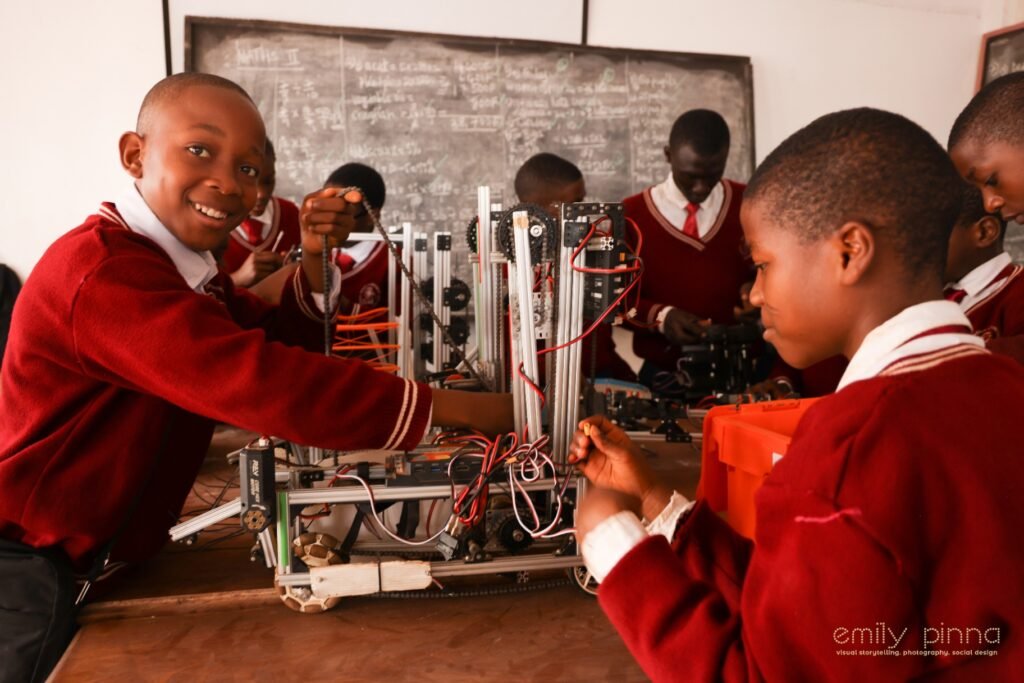
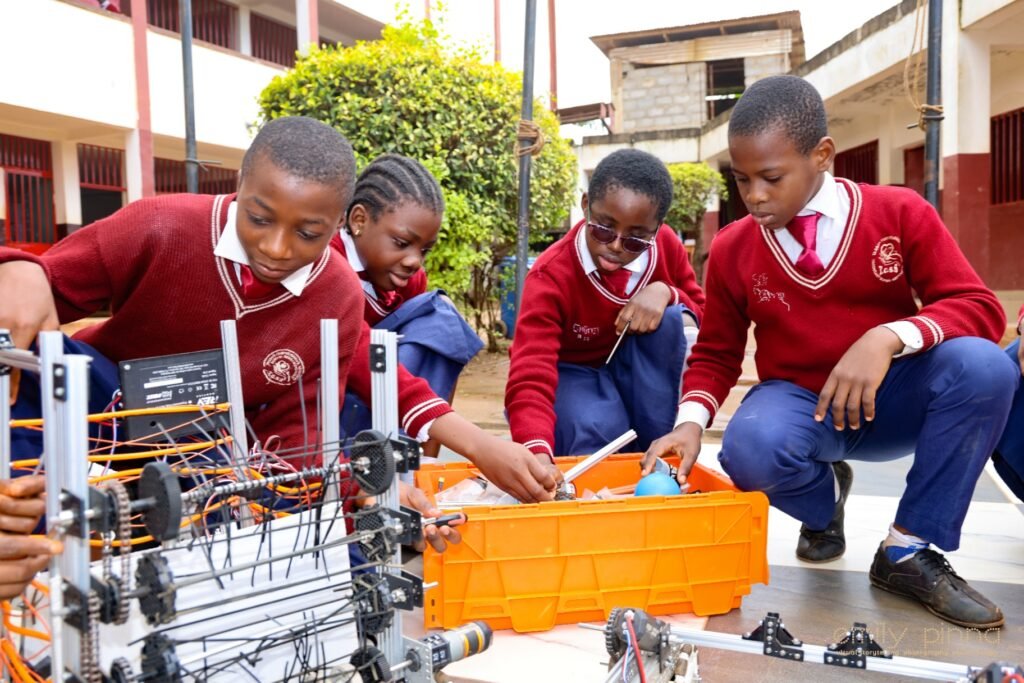
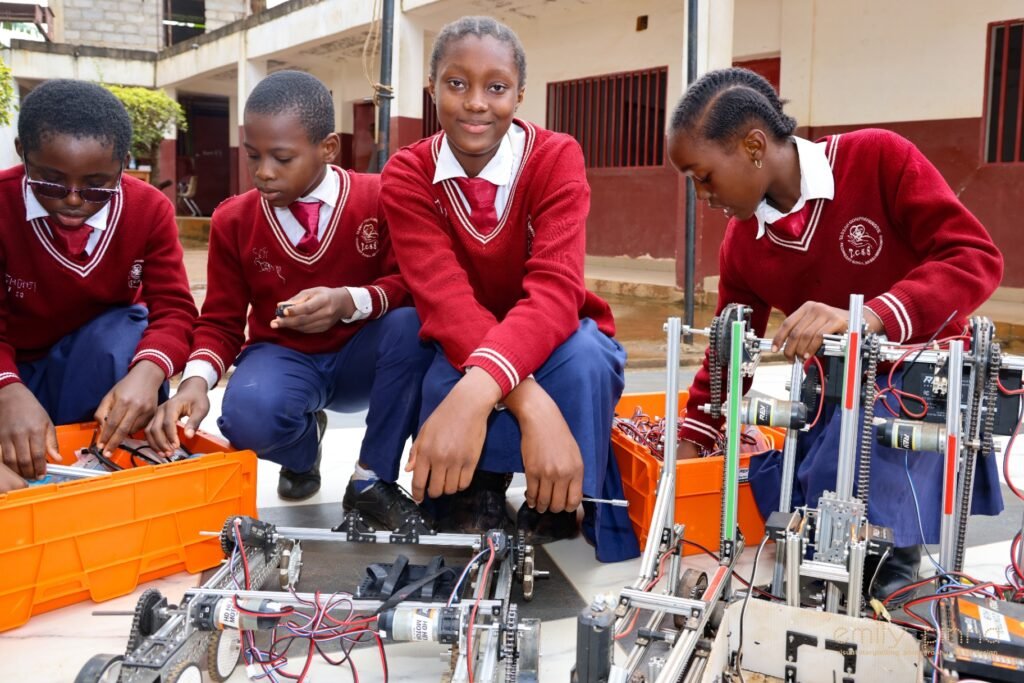
The IFISA Programme is a 13-year developmental framework that runs alongside a school’s national curriculum. It is designed to ensure that students build deep, cumulative competence over time rather than encountering STEM and technology in isolated bursts.
Every stage builds on the last. Students who complete the full programme graduate with not just knowledge, but with technical fluency, innovation portfolios, and the capacity to lead in a rapidly changing world.
13 Years of Learning
A complete, coherent pathway from age 5 to 18
4 Developmental Stages
Age-appropriate progression with clear stage outcomes
7 Curriculum Strands
Integrated across all subjects and disciplines
The Pedagogy
Curriculum as a Workshop
Every IFISA learning environment follows a consistent pedagogical model that moves from a real problem through to deep thinking outcomes.
1
Room
The learning environment, physical or digital, is intentionally designed for hands-on inquiry.
2
Problem
Every session begins with a real, meaningful problem that motivates the learning ahead.
3
Step Outcomes
Structured experiences guide learners through a process with clear, checkable milestones.
4
Computational Outcomes
Computational or technical tools are used to model, build, test, or analyse real scenarios.
5
Thinking Outcomes
Reasoning, creativity, systems thinking, collaboration, and reflection are developed as explicit outcomes.
Core Elements
Six Pillars of the IFISA Programme
Every stage of IFISA integrates these six pillars with increasing depth and complexity as learners progress.
Computational Thinking Across the Curriculum
Algorithms, decomposition, pattern recognition, and abstraction applied across all subjects, not just computing class.
Engineering and Design
Structured design-build-test-iterate cycles using real materials, tools, and engineering principles at every stage.
Data and AI Literacy
From basic data exploration to machine learning concepts, with ethics woven throughout.
Mathematical Modelling and Scientific Inquiry
Applied mathematics and empirical inquiry used to model real-world phenomena and test hypotheses.
Human-Centered Innovation
Design thinking, empathy, ethics, leadership, and community impact as explicit programme components.
Portfolio and Capstone Projects
Every student builds a visible portfolio across 13 years, culminating in a capstone project at each stage transition.
The IFISA Graduate
What a Completed IFISA Pathway Produces
Students who complete the full IFISA programme graduate with far more than academic qualifications.
Knowledge & Skills
- Technical fluency in coding, data, and AI systems
- Engineering design and prototyping experience
- Mathematical modelling and quantitative reasoning
- Scientific inquiry and evidence-based argumentation
- Digital citizenship and AI ethics literacy
Credentials & Outputs
- IFISA Innovation Portfolio spanning 13 years
- Stage certificates and competency records
- IFISA Diploma or Certificate (upper secondary)
- Capstone project documentation and presentation
- Industry exposure and university readiness record
Ready to Implement IFISA?
Explore the learning stages in detail, or speak with our team about a pilot implementation for your school.