
Research & Impact
Evidence-Informed. Impact-Focused.
IFISA is grounded in learning science, computational thinking research, and project-based STEM education, built to generate and use evidence at every stage.

Our Research Foundation
Built on Evidence, Designed to Generate It
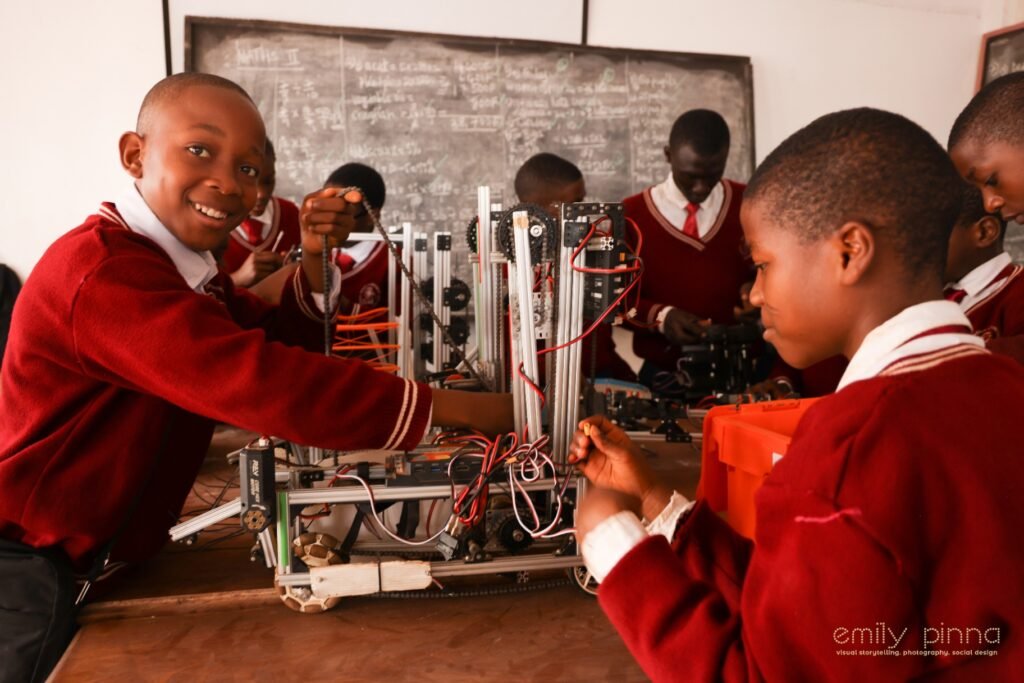
IFISA draws on a robust body of research in computational thinking development, STEM identity formation, project-based learning, and AI literacy education. The programme is not a theory: it is a tested, evidence-informed framework that continues to evolve based on what we observe in classrooms.
As IFISA scales, it is also designed to contribute to the research base, generating new evidence on what works in integrated STEM education, particularly in under-resourced and emerging contexts where this evidence is most scarce.
Research Partnerships
Collaborate on IFISA Research
We are actively seeking university and research institution partners to co-design studies, validate outcomes, and contribute to the evidence base for future-ready STEM education.
Research Areas
What IFISA Studies and Measures
Our research programme spans eight priority areas, each directly informing how the programme is designed, taught, and improved.
Computational Thinking Development
How computational thinking develops across age bands, and which pedagogical approaches accelerate growth most effectively.
STEM Identity and Participation
How IFISA affects students’ sense of belonging in STEM, particularly for groups traditionally underrepresented in science and technology fields.
AI Literacy and Ethics
How students develop nuanced, critical understanding of AI systems, and what instructional approaches produce genuine ethical reasoning, not just surface familiarity.
Design-Based Learning and Project Quality
What makes student projects genuinely rigorous, and how project quality correlates with the depth of teacher implementation.
Data Literacy Development
How students build the ability to find, use, interpret, and critically evaluate data, a foundational skill for every modern career.
Teacher Professional Growth
How teachers develop confidence and competence in integrated STEM instruction, and what professional development models produce durable change.
Portfolio Quality and Capstone Outcomes
How student portfolios evolve over time, what distinguishes high-quality capstone work, and how these outputs predict university and career readiness.
Implementation in Under-Resourced Contexts
How IFISA can be implemented effectively in schools with constrained resources, and what adaptations are needed to preserve quality and equity.
Impact Measurement
How We Measure What Matters
IFISA tracks impact across multiple dimensions, from student participation to post-secondary outcomes.
Student Participation and Retention
Tracking who enters IFISA, who stays, and who completes, with particular attention to equity across gender, socioeconomic background, and geography.
Project and Portfolio Quality
Rubric-assessed quality scores for student projects and portfolio entries across all stages, mapped against IFISA competency frameworks.
Confidence, Agency, and Innovation Identity
Validated survey instruments measuring whether students see themselves as capable innovators, problem solvers, and STEM practitioners.
Computational Thinking Growth
Pre/post assessments and longitudinal tracking of computational thinking skills development across the 13-year pathway.
Teacher Implementation and Instructional Change
Classroom observation data, teacher self-assessment, and pedagogical fidelity measures tracking the depth of IFISA implementation over time.
Pathway Progression and Post-Secondary Readiness
Longitudinal tracking of IFISA graduates into university STEM programmes, industry roles, and entrepreneurship, the ultimate test of programme effectiveness.
Partner on Research
If you’re a researcher or institution interested in studying IFISA outcomes, we’d love to hear from you.